EN
▼
EN
▼
 English
 Français
 Deutsch
 Nederlands
 Español
 Italiano
 Polski
 Kiswahili
EN
▼
English Français Deutsch Nederlands Español Italiano Polski KiswahiliBased on 620+ Reviews
Based on 250+ reviews
Based on 250+ reviews
Based on 620+ Reviews
*price p.p. incl. guide, safari jeep, hotel and park entrance fees, excl. international flight (based on six persons)
This safari is packed with action and offers the chance for lifetime experiences. Etosha National Park is one of only a few premier wildlife reserves left in the world that provides the opportunity to experience southern Africa’s Big Game first-hand.
Leaving Etosha for Damaraland, we will experience why Namibia is called the Land of Contrasts as the scenery and landscape change completely and once again everything changes as we reach the desolation of the Skeleton Coast. Arriving in the friendly town of Swakopmund is almost a relief, as our senses have been so overloaded during our journey to get here.
We cruise the famous lagoon at Walvis Bay with its myriad of ocean creatures and birds. Cape fur seals, flamingos, great white pelicans, and much more are all on the sighting’s menu.
We roller-coast the high dunes and play chicken with the waves during our trip to the remote, beautiful and historic Sandwich Harbour.
| 2 persons |
|---|
|
$2822.53 USD*
|
* Indicative costs per person, excluding international airline tickets
You will be collected from your accommodation within the Windhoek city limits at 07:00 and transferred to Chameleon Headquarters for a short pre-departure meeting.
Heading north from Windhoek, we stop briefly at the small town of Otjiwarongo to gather some last-minute supplies before continuing to Etosha, and we enjoy a light lunch pack whilst “on the move”. We enter Etosha National Park and embark on a game drive to our overnight accommodation.
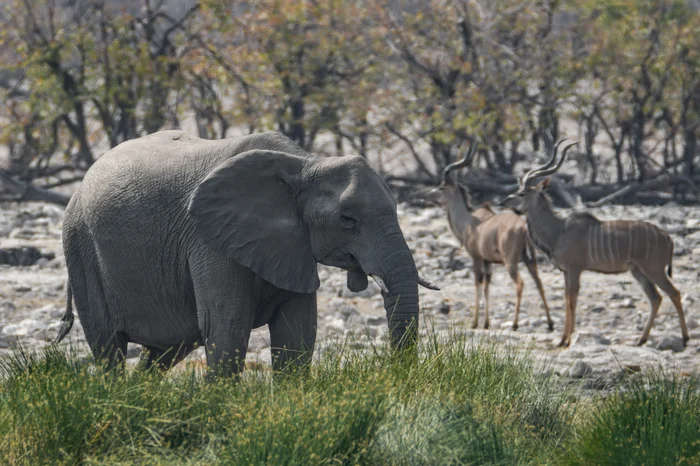
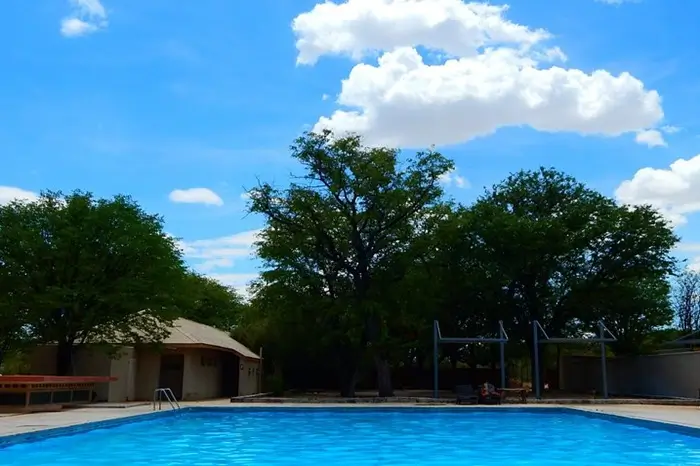
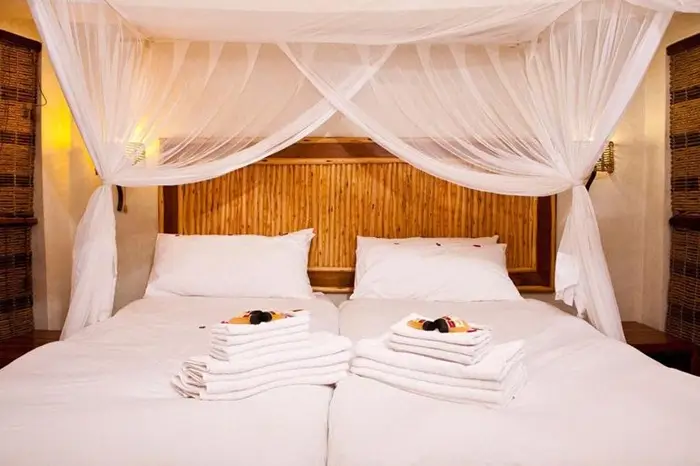
Etosha is huge, spanning just over 22,000 square kilometres and home to 114 species of mammal, 350 species of bird, 110 species of reptile, countless numbers of insects, and, somewhat bizarrely, one species of fish. There are good chances of spotting many of these different creatures as we tour through the park, stopping at the various waterholes along the way. All visitors must be in camp by sunset. We aim to arrive at our lodge before sunset, allowing time to settle into our rooms with en-suite facilities. Dinner is at the camp restaurant tonight.
The ‘game show’ in Etosha doesn’t stop when the sun goes down. All the Etosha camps have floodlit waterholes for extra game viewing opportunities. The waterhole is located near our accommodation. A visit, or two, is highly recommended this evening, as we can expect many species to visit during the night. This waterhole is renowned for its popularity with elephants and the critically endangered black rhino.
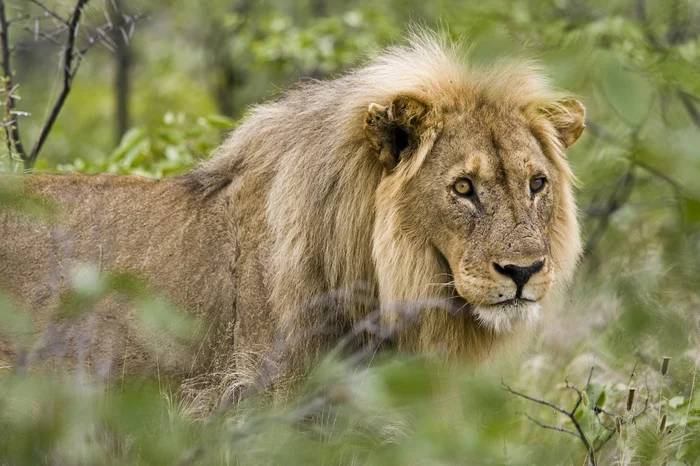
We have the whole day to explore Etosha in an open game viewer, and we want to make the most of it. We enjoy an early breakfast, and the rest of the day we explore the park with our local guide and our guide on an open game viewer. Early morning is usually a productive time for game viewing, and first thing in the morning is a good time to catch big cats returning from the hunt.
Etosha is a desert landscape, and water is the most scarce natural resource. There are, however, numerous waterholes here, both natural and man-made, and our game-driving technique is to take in as many of these as possible. Here, we hope that the game will come to us as thirsty animals await a much-needed drink.
On our way today, we will stop to have a closer look at the Etosha Pan. The name Etosha translates as ‘great white space’, but this name does not do justice to the immensity of the pan. Over 4,700 square km of dazzling white mineral pan, so big that it can be seen from space.
We exit Etosha at the Anderson gate, close to sunset, and it is just a short drive to our accommodation, which features a comfortable, spacious twin-share room with modern en-suite bathroom facilities. An ideal space to sit back, relax and enjoy the beauty that surrounds you. A fantastic dinner tonight.
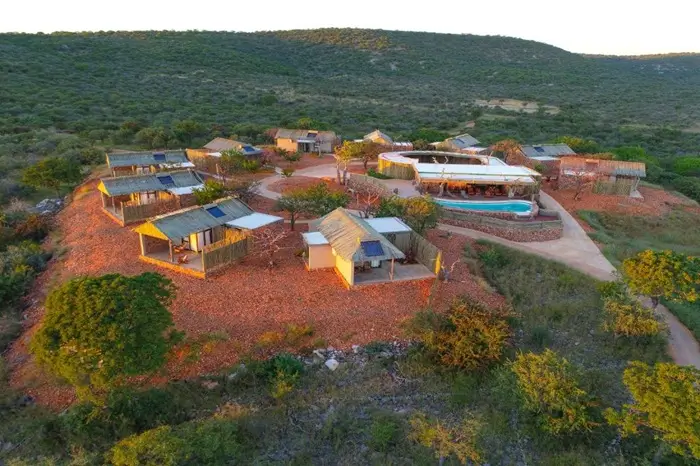
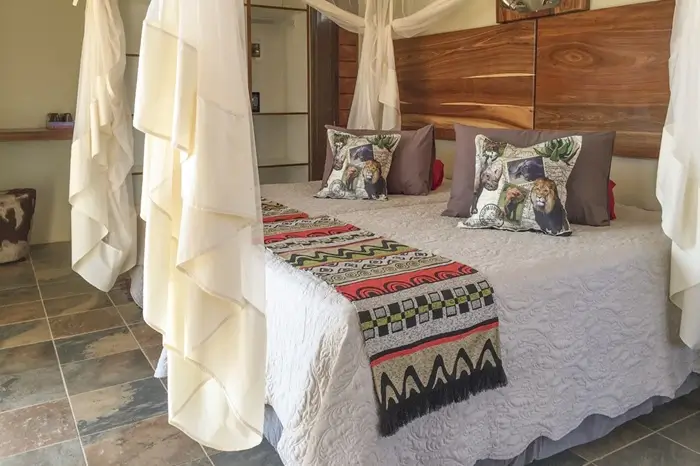
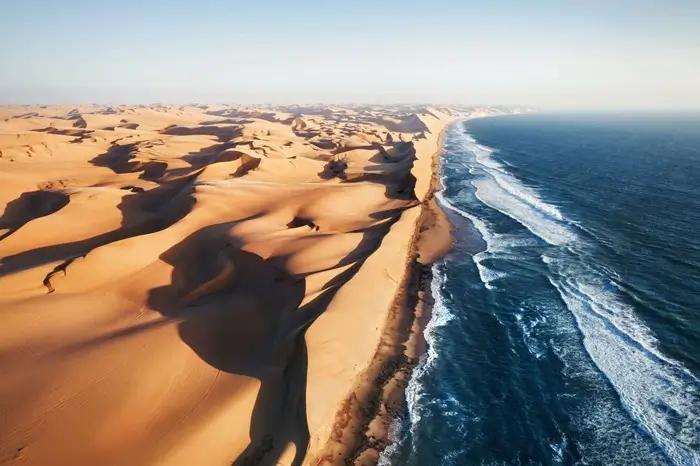
We hit the road with an early start and are heading for the Skeleton Coast, taking the scenic route. We first head south on the main road, passing the small town of Outjo, and then travel westwards, picking up the gravel road as we pass through the area known as Damaraland.
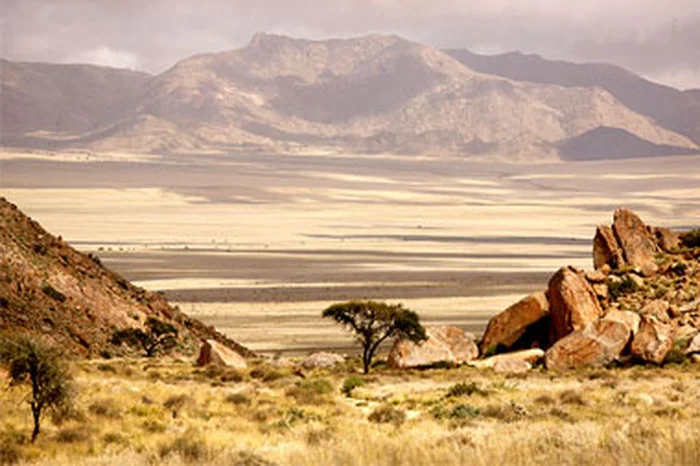
Damaraland is renowned for its stunning scenery, majestic mountains, vast open grasslands, and tall koppies (small hills) of rounded pink granite boulders, as well as its expansive landscapes and vast open skies. We also have the opportunity to meet some of the locals, as there are several places along our route today where we can find informal shops selling locally made, handcrafted souvenirs. Represented here are ladies from the Himba, Herero, and Damara tribes, and most often, they are wearing their traditional attire. Here we can interact with some of the colourful local characters who live in this harsh environment. Making a small purchase here is a good way to inject some cash directly into the local economy.
We continue through the beautiful landscape, making a stop for a light picnic lunch, under the shadow of Namibia’s highest mountain, the Brandberg. Rising from the desert floor, this giant monolith is 2,573 m above sea level and is formed of pink-tinged granite. We continue our journey west and soon arrive at the coast, where we encounter the chilly waters of the Atlantic Ocean. The whole coastline of Namibia is known as the Skeleton Coast, and it is easy to see why this barren seaboard is so named, with its forbidding mountains and barren beaches. The wind, the waves and the giant fog banks all conspire to push ships onto the beach. The countless mariners who, in olden times, found themselves shipwrecked here faced the stark prospect of no fresh water, no food, no rescue and a slow and certain death by exposure. Their Shipmates who went down with their ship were thought to be the lucky ones. Heading south on the coast road, our next stop is a more recent shipwreck. 15 km south of the small town of Henties Bay, a fishing trawler, The Zeila, was beached in 2008. She was an old vessel that had been sold for scrap and was under tow at the time. The cable snapped, and, like so many ships before her, she was caught in the swell and currents and ended up on the beach. She lies pretty close to the shore and is well-positioned for photos.
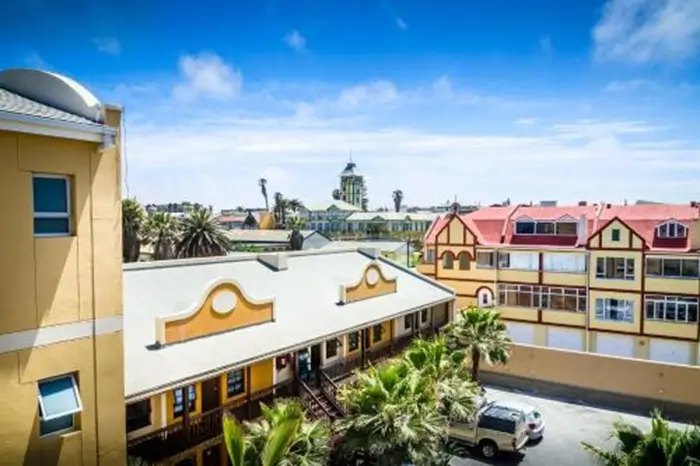
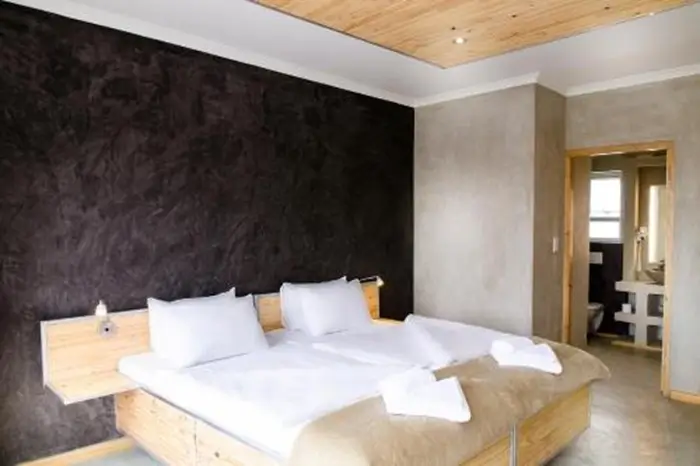
We complete the final leg of our journey to Swakopmund and check into our accommodation, a centrally located hotel. Swakopmund was founded by Captain Kurt von François of the German Empire’s imperial colonial army in 1892. (He also founded Windhoek in 1890). It is an interesting town to say the least, bounded to the north, the east and the south by the mighty dunes of the Namib Desert and to the west by the Atlantic Ocean. There are still many examples of colonial German architecture to be seen, and the German language remains widely spoken. Swakopmund boasts some truly excellent restaurants, and again, your guide will be able to provide recommendations and assist with bookings. We say goodbye to our guide this afternoon, but before departing, a full briefing of the programme for the rest of the trip will be given.
We will be collected from our accommodation this morning at a predetermined time for our cruise excursion on Walvis Bay lagoon. Heading south, it is only a short 40 km drive along the dramatic coast road to the port town of Walvis Bay. Walvis Bay is Namibia’s largest port, and its strategic location gives excellent access to the main world shipping routes. The economic importance of Walvis Bay to Namibia is hard to overestimate. Apart from its own interests, three of Namibia’s direct neighbours, Botswana, Zambia and Zimbabwe are all landlocked, and most of their shipping requirements are handled through
Walvis. Home to the Namibian fishing fleet, Namibia is blessed with highly nutrient seas. The Benguela Current, which pushes alongside Namibia’s 2000 km coastline, brings unusually rich concentrations of plankton, supporting an abundance of commercial fish species. The name translates simply to Whale Bay, and from the late 17th to the early 18th century, a period of approximately 20 years, European and American ships hunted the abundant whales with great ferocity. Only when the whale numbers dropped to below economic numbers did the slaughter end.
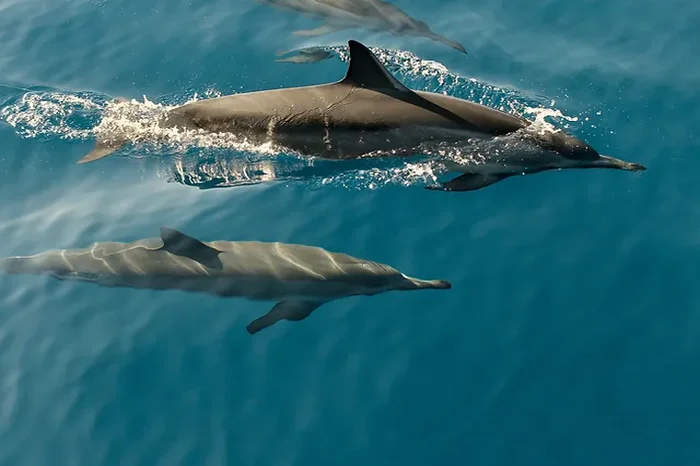
We are heading to the Walvis Bay waterfront area, where we will be welcomed aboard our boat for our cruise around the Walvis Bay lagoon. The lagoon is a Ramsar Site, designated under the auspices of UNESCO as a wetland area of special international importance. With a super-nutrient ocean and special international Ramsar protection, you might expect to see an abundance of ocean fauna and birdlife, and you won’t be disappointed. Cape Fur seals are plentiful and usually try to hitch a lift with us, and great white pelicans often come swooping down to fly alongside. The lagoon attracts three species of Dolphin, the bottlenose, the dusky and the heave side dolphin, and we are likely to see more than one of these amazing species. Almost against the odds, great whales still sometimes frequent these waters and humpback and southern right whales pass through Walvis Bay on their way between feeding and breeding grounds, coming right into the lagoon. Orcas, also known as killer whales, are occasionally seen, but this is a rare occurrence. Other main species attracted by the cold, rich waters are sunfish, leatherback turtles, African penguins and greater and lesser flamingos.
Our boat skipper will take us right across the lagoon, where we will see the Pelican Point lighthouse (34 meters tall and erected in 1932), which guards the end of the lagoon peninsula. The lighthouse used to be manned but has long since been converted to operate automatically, and the old lightkeeper’s accommodation has now been converted into a lodge. Weather permitting, we may cruise past the lighthouse for a short sail on the open Atlantic Ocean.
On our cruise today, we will be accompanied by a local expert guide. Towards the end of our excursion, we will be offered a light lunch that typically includes local fish and, of course, the world-famous Walvis Bay oysters, all accompanied by sparkling wine and excellent local Namibian beer.
Returning to Swakopmund in the afternoon, you can take advantage of further activities if you still have energy. The town centre is small and easily explored on foot, but there are also many extra, optional activities available (at an additional cost). Scenic flights over the desert are very popular, and for the more adventurous, try sky diving or quad biking over and in the Namib dunes. Dinner tonight is for your own account.
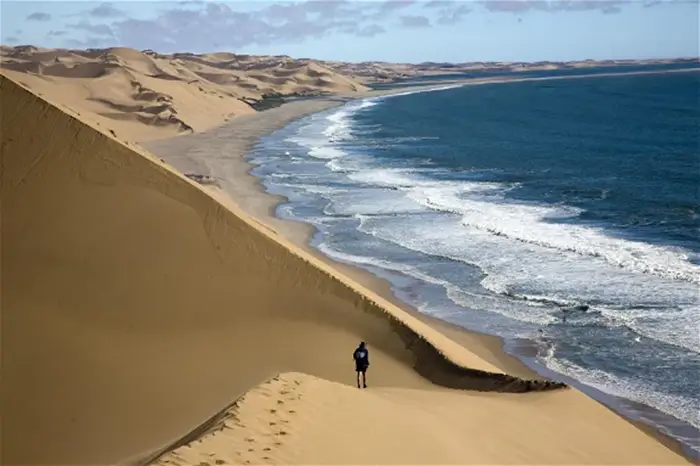
This morning, we will again be collected from our accommodation at a predetermined time for our excursion to Sandwich Harbour. We will travel south along the coastal road, beyond Walvis Bay and into the desert to experience one of the more adventurous activities available in Namibia—a journey through the dunes to Sandwich Harbour. Sandwich also wears the badge of Membership to the Ramsar Convention and is located about 50 km south of the port town. Appearing on Portuguese maritime charts as far back as the 15th century, Sandwich Harbour was first called Port d’Ihelo, and it was later that the name Sandwich was coined. The Sandwich Islands were noted on a chart produced by the India Company, with information supplied by a British survey vessel working in the area around 1785. The survey vessel was called The Sandwich. Sandwich Harbour once boasted an abundance of fresh water, with artesian springs of sweet water bubbling up from under the dunes and onto the beach, and into the Sandwich Harbour lagoon. So abundant was this water that the lagoon often contained more freshwater than saltwater. The source of this liquid gift was the Kuiseb River Delta, where underground water still flowed, even during times of drought. Freshwater made this isolated harbour habitable, and over the centuries, mankind has tried valiantly to commercialise the area. Whaling was what first caught the eyes of the early prospectors, closely followed by guano. Guano is today mainly used as a fertiliser, but in the 16th century, it was a vital ingredient of gunpowder and was highly valued. Commercial fishing was popular, diamond prospecting was feverish, and there was even an abattoir and meat canning factory established in 1887. Today, there is virtually nothing left of this once hive of activity. In more recent times, the freshwater supply has dramatically decreased, and almost all signs of past human endeavour have been either washed into the sea or buried under the ever-shifting sands, leaving Sandwich Harbour pristine and naturally beautiful for our visit.
To get there, though, is another story. This excursion could have been referred to as a road trip, that is, if there was a road! Access to Sandwich is limited, and it’s all action. From Walvis Bay, we head south, over, around and through the Kuiseb River Delta until we reach the high dunes of the coastal dune sea. From the dune belt, depending on the local conditions on the day, we will either go up and over the dunes or head for the beach and follow the coast, driving only meters from the waves. For the final 8 km of distance, there is only one way to go. We will join a narrow strip of beach that runs right between the sheer towering dunes on one side and the angry, snatching Atlantic on the other. This mere ribbon of the beach is the only way, and vehicles are sometimes washed with salt water as they make their way. Timing is vital as this beach access is closed off by the breakers at high tide.
There is still a lagoon to see at Sandwich, although the entrance is mostly silted up, and we can imagine how the tall ships of another age must have looked as they snubbed at their anchorage. The best views are from the top of the high dunes, but it is also highly recommended to take a walk along the lagoon shore and to push your toes into the soft, wet sand. On our return trip, after once again braving the ocean gauntlet and again depending on local, on-the-day conditions, we will usually take a thrilling drive up and over some of the highest dunes in Namibia. The term is Roller Coasting the dunes, our
own natural theme park in the Namib Desert. Dinner tonight is for your own account.
Today is our last day, and we will be collected from The Delight at 13:00 and transported back to Windhoek. We do still have a few hours, and Swakopmund has more to tempt us. There is, of course, the option to have a lie-in, but if you decide to get up and about, then Swakopmund offers many opportunities to keep us busy during our last morning here. The town centre is small and easily explored on foot, but there are also many additional optional activities available (at an extra cost).
For the more leisurely-minded, the town centre is small and easily explored on foot. There are also scenic flights over the shipwrecks and the desert, which are very popular, as are bicycle tours and the excellent ‘living desert’ excursions. For the Living Desert excursion, you would join a group and travel in a vehicle with a specialist guide who will take you into the dunes and introduce you to some of the fantastic creatures and plants that survive in one of the most challenging environments in the world. For those with a love of adrenaline, quad biking and sky diving are on the menu, and sandboarding is also very popular if you fancy going down the slip face of a dune at 60 km per hour. Our transport back to Windhoek, departing at 13h00, should take no longer than five hours, and you will be dropped off at your accommodation anywhere within the city limits of Windhoek.
At Voyage Vista African Safaris, you have complete freedom to tailor your adventure. Our sample itineraries are fully flexible and can be customized to match your interests. Our travel experts collaborate closely with you to design the perfect journey of your dreams.
Experience expert private guides, well-equipped private jeeps, customizable itineraries, and exceptional customer care. Our thorough trip planning allows you to travel completely stress-free. We truly are your ideal partner for a memorable journey supported by top-quality service.