EN
▼
EN
▼
 English
 Français
 Deutsch
 Nederlands
 Español
 Italiano
 Polski
 Kiswahili
EN
▼
English Français Deutsch Nederlands Español Italiano Polski KiswahiliBased on 620+ Reviews
Based on 250+ reviews
Based on 250+ reviews
Based on 620+ Reviews
Kenya is renowned for its spectacular wildlife and the iconic Masai Mara, one of Africa’s most celebrated safari destinations. Each year, millions of wildebeest, zebras, and other grazing animals undertake the Great Migration, crossing vast plains and the challenging Mara River in search of fresh grazing lands. This extraordinary natural event is considered one of the greatest wildlife spectacles on Earth, offering visitors the chance to witness dramatic river crossings, incredible predator-prey interactions, and the untamed beauty of the African wilderness.
The Great Wildebeest Migration Safari in Kenya is widely regarded as the largest land mammal migration on Earth. Each year, more than 1.5 million wildebeest, accompanied by hundreds of thousands of zebras, gazelles, and other herbivores, move across the vast plains of the Serengeti and Masai Mara in search of fresh grazing.
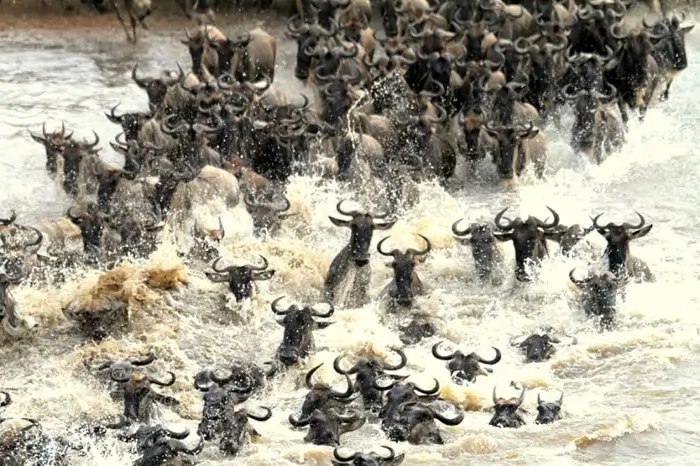
One of the most dramatic moments of this incredible journey is the crossing of the Mara River. Here, massive herds brave strong currents and natural predators as they continue their migration. The river crossings are among the most sought-after wildlife experiences in Africa, attracting visitors from around the world.
Throughout the migration, predators such as lions, leopards, cheetahs, and crocodiles follow the herds, creating remarkable wildlife encounters and showcasing the raw power of nature. The constant movement of animals across the plains, accompanied by the sounds of thousands of wildebeest and zebras, makes this one of the most unforgettable safari experiences on the planet.
The Great Wildebeest Migration is a continuous natural cycle that moves between Serengeti National Park and Masai Mara National Reserve. From January, the herds gather in the southern Serengeti, where the rains create rich grazing areas. As the seasons change, they gradually move northward, crossing into Kenya around late July. During this period, vast numbers of wildebeest, zebras, and other grazers spread across the plains of the Masai Mara. As conditions shift again, the herds begin their return south, crossing back into the Serengeti and completing a migration cycle of roughly 800 kilometres. This constant movement is driven by rainfall and the search for fresh pasture, making the migration a year-round wildlife phenomenon rather than a single event.
Discover the magic of Africa’s most extraordinary wildlife spectacle with our carefully crafted Great Wildebeest Migration itineraries. From dramatic river crossings and breathtaking landscapes to unforgettable safari encounters, each journey is designed to bring you closer to the heart of this remarkable natural phenomenon.
Explore our inspiring itineraries and experience the wonder, excitement, and beauty of the Great Migration with Voyage Vista African Safaris.
For the best chance to witness the Great Wildebeest Migration in Kenya, we recommend traveling between July and October, when the herds move through the Masai Mara. During the rest of the year, the migration continues across the border in Tanzania’s Serengeti ecosystem.
July
The first herds begin arriving in Kenya, often crossing the Mara River in search of fresh grazing. This is one of the best times to witness the dramatic river crossings.
August
Large numbers of wildebeest and zebras spread across the Masai Mara plains, while predators closely follow the migration, creating exceptional wildlife-viewing opportunities.
September
The herds are well established in the Mara, and the vast open plains offer spectacular safari experiences with abundant wildlife and breathtaking scenery.
October
As seasonal rains begin to return, the landscape becomes greener and wildlife remains plentiful throughout the reserve.
November
The migration gradually moves southward as the herds begin their journey back into Tanzania’s Serengeti, continuing their annual cycle.