EN
▼
EN
▼
 English
 Français
 Deutsch
 Nederlands
 Español
 Italiano
 Polski
 Kiswahili
EN
▼
English Français Deutsch Nederlands Español Italiano Polski KiswahiliBased on 620+ Reviews
Based on 250+ reviews
Based on 250+ reviews
Based on 620+ Reviews
*price p.p. incl. guide, safari jeep, hotel and park entrance fees, excl. international flight (based on six persons)
Departures on this 4-day and 3-night accommodated adventure are from Windhoek every Tuesday, and this itinerary is a fantastic way to quickly ‘’Snapshot’’ three of Namibia’s greatest highlights.
Excellent wildlife opportunities abound in Etosha National Park, where in numerous instances the animals come to us as we seek out the myriad of waterholes. We are looking for predators and prey alike, lion and leopard, elephant and giraffe, black rhino and eland are all in the mix of possible sightings, together with so many more species of mammals and birds that it is impossible to mention them all.
The mineral pan ‘’The Great White Space’’ from which Etosha takes its name is 22,000 square km of desolate, dazzling expanse, so big it can be seen from space.
Beautiful Damaraland gives us a unique ‘’Big Sky’’ experience, where the towering pink granite koppies seem to touch the very sky on our horizon. Stunning in every season, this region of mountains and grassland, trees and riverbeds, desert elephant and desert rhino, puts real meaning into the words ‘’breathtaking. We meet some of the locals as we travel through Damaraland, Himba, Herero & Damara people, often in traditional dress, who welcome us to their makeshift roadside stalls where they sell traditional handicrafts to the passing traffic. Onwards, westward, passing under the shadow of Namibia’s highest mountain, The Brandberg, we make our way down to the Atlantic Ocean.
Reaching the wild and rugged Skeleton Coast, we follow the ocean road into the unusual and quirky town of Swakopmund. Referred to by some as the adrenaline capital of Namibia, there are certainly some hair-raising experiences on offer, but Swakopmund is also a place where you can relax and recharge.
Walvis Bay Lagoon, an internationally recognised Ramsar site wetland, is home to spectacular flamingo flocks, before heading back to the city and journey’s end.
| 2 persons |
|---|
|
$2822.53 USD*
|
* Indicative costs per person, excluding international airline tickets
You will be collected from your accommodation within the Windhoek city limits at 07:15 and transferred to Chameleon Safaris Head Office for a short pre-departure meeting.
We first drive north via the small town of Okahandja, but soon we are heading west, past the tiny centres of Karibib and Usakos, to the port town of Walvis Bay—the edge of Africa and the Skeleton Coast. Walvis Bay Lagoon is an internationally recognised Ramsar site (Convention on Wetlands of International.
Importance, Especially as a Waterfowl Habitat) and is justly renowned for its birdlife. Flamingos, pelicans, African oystercatchers and turnstone, to name but a few of the more than 50 bird species occurring here. This, along with other aquatic fauna, including bottlenose and Heaviside dolphins, humpbacked and southern right whales, ocean sunfish, and Cape fur seals, all contribute to making Walvis Bay lagoon a wetland wonderland.
In particular, we are here to see the flamingos, which are usually abundant and found within easy photo distance from the shore. There are two types of flamingos to see, lesser and greater, and they accumulate here because Namibia’s Atlantic coast is abundant with both phytoplankton and zooplankton. Flamingos do not enjoy a solid diet; they live on microorganisms such as plankton, and they are filter feeders, much like oysters. They rinse the seawater through their beaks, and tiny filaments filter out the nutrients as it swishes by. Flamingos are unable to eat unless their heads are fully inverted, and, while feeding, they walk around in a circle, stirring the sand and mud with their feet to release the nutrients. Certain types of these microorganisms turn reddish-pink when they die, and this accounts for the pink colour of the birds.
Flamingos do not breed in Walvis Bay. The tides here are not usually very steep, but occasional spring tides can bring deeper waters, and this is not suitable for the specialised nest constructed by the birds. Flamingos build a nest, called a cone, out of sand and mud, which has a hollow top into which they lay a single egg. This cone is designed to keep the egg out of the water, and so a tidal environment does not work. Instead, vast flocks of birds typically head for the Etosha Pan or the Makgadikgadi Pan in Botswana for breeding. Both these mineral pans are seasonal and are usually dry, but can flood when there is sufficient
rain. It is still not properly understood how the flamingos know when there has been suitable rainfall in these relatively faraway catchment areas, but somehow, they do know, and they leave the coast in great flocks that streak the horizon pink as they head inland.
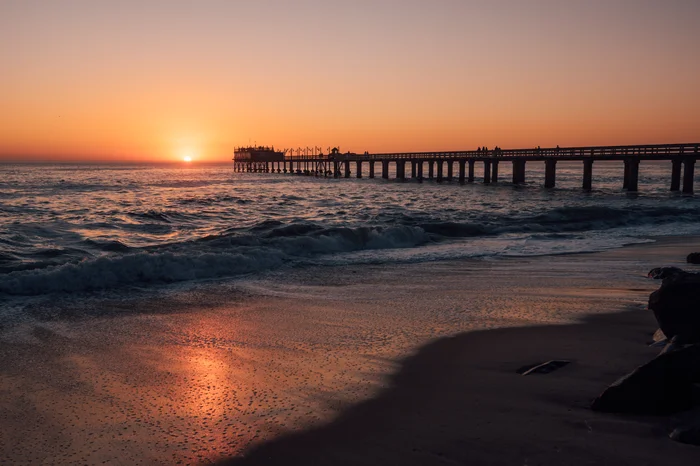
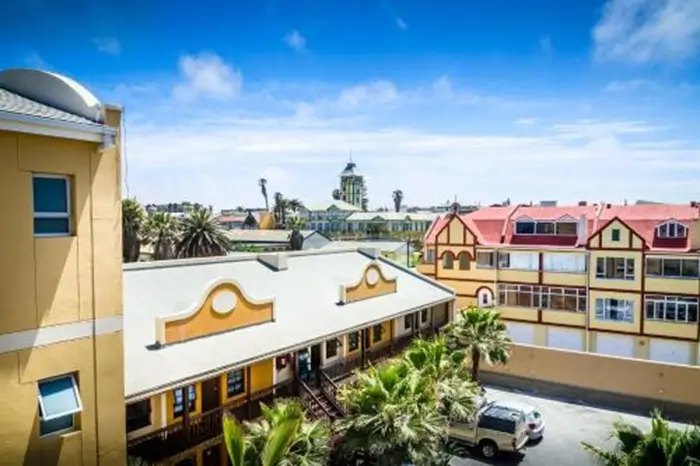
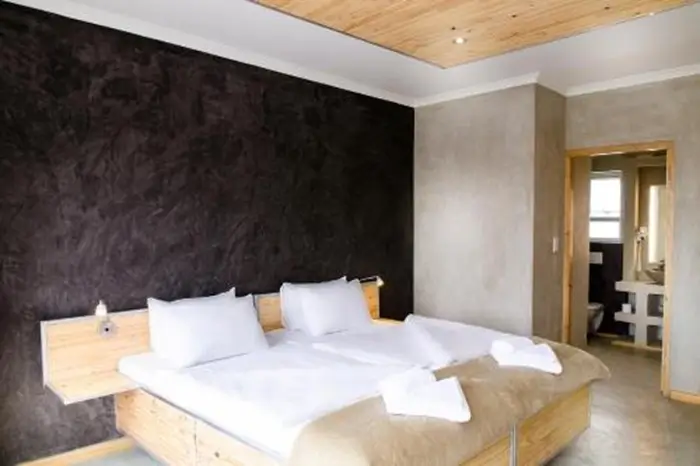
We complete the final leg of our journey to Swakopmund and check into our accommodation at a centrally located hotel. Swakopmund is a fascinating place, to say the least, founded by Captain Kurt von François of the Imperial German Colonial Army in 1892. (He also founded Windhoek in 1890). It is bounded to the north, the east and the south by the mighty dunes of the Namib Desert and to the west by the Atlantic Ocean. There are still many examples of colonial German architecture to be seen, and the German language remains widely spoken.
Lunch and dinner tonight are for your own account. Swakopmund boasts some truly excellent restaurants, and again, our guide will be able to help you with recommendations and bookings.
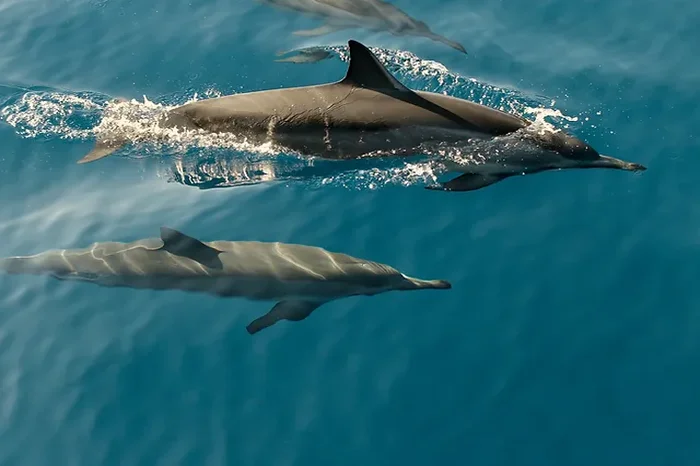
We will be collected from our accommodation this morning at a predetermined time for our cruise excursion on Walvis Bay lagoon. Heading south, it is only a short 40 km drive along the dramatic coast road to the port town of Walvis Bay. Walvis Bay is Namibia’s largest port, and its strategic location gives excellent access to the main world shipping routes. The economic importance of Walvis Bay to Namibia is hard to overestimate. Apart from its own interests, three of Namibia’s direct neighbours, Botswana, Zambia and Zimbabwe, are all landlocked and most of their shipping requirements are also handled through Walvis.
Home to the Namibian fishing fleet, Namibia is blessed with highly nutrient seas. The Benguela Current, which pushes alongside Namibia’s 2000 km coastline, brings unusually rich concentrations of plankton, supporting an abundance of commercial fish species.
The name translates simply to Whale Bay, and from the late 17th to the early 18th century, a period of approximately 20 years, European and American ships hunted the abundant whales with great ferocity. Only when the whale numbers dropped to below economic numbers did the slaughter end.
We are heading to the Walvis Bay waterfront area, where we will be welcomed aboard our boat for our cruise around the Walvis Bay lagoon. Our boat skipper will take us right across the lagoon, where we will see the Pelican Point lighthouse (34 meters tall and erected in 1932), which guards the end of the lagoon
peninsula. The lighthouse used to be manned but has long since been converted to operate automatically, and the old lightkeeper’s accommodation has now been converted into a lodge. Weather permitting, we may cruise on past the lighthouse for a short sail on the open Atlantic Ocean.
On our cruise today, we will be accompanied by a local expert guide. Towards the end of the trip, we will be offered a light lunch that typically includes local fish and, of course, the world-famous Walvis Bay oysters, all accompanied by sparkling wine and excellent local Namibian beer.
Returning to Swakopmund in the afternoon with time to spare for other activities if you would like to participate. Dinner tonight is for your own account in one of the many great restaurants in Swakopmund.
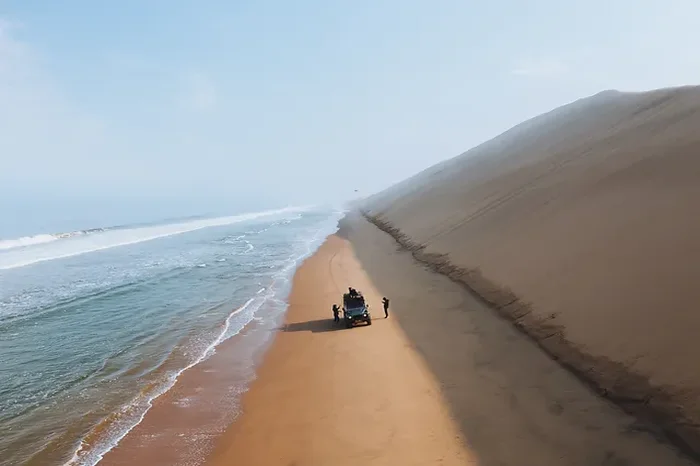
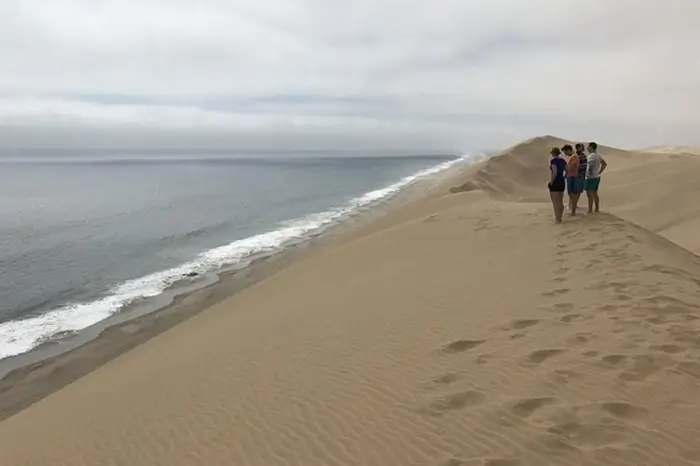
This morning, we will again be collected from our accommodation at a predetermined time for our excursion to Sandwich Harbour. We will travel south along the coastal road, beyond Walvis Bay and into the desert to experience one of the more adventurous activities available in the Namib – a journey through
the dunes and along the beach to Sandwich Harbour. Sandwich also wears the badge of Membership to the Ramsar Convention and is located about 50 km south of the port town. Appearing on Portuguese maritime charts as far back as the 15th century, Sandwich Harbour was first called Port d’Ihelo, and it was later that the name Sandwich was coined. The Sandwich Islands were noted on a chart produced by the India Company, with information supplied by a British survey vessel working in the area around 1785. The survey vessel was called The Sandwich.
Sandwich Harbour once boasted an abundance of fresh water, with artesian springs of sweet water bubbling up from under the dunes and onto the beach, and into the Sandwich Harbour lagoon. So abundant was this water that the lagoon often contained more freshwater than saltwater. The source of this liquid gift was the Kuiseb River Delta, where underground water still flowed, even during times of drought. Freshwater made this isolated harbour habitable and over the centuries, mankind has tried valiantly to commercialise the area. Whaling was what first caught the eyes of the early prospectors, closely followed by guano. Guano is today mainly used as a fertiliser, but in the 16th century, it was a vital ingredient of gunpowder and was highly valued. Commercial fishing was popular, diamond prospecting was feverish, and there was even an abattoir and meat canning factory established in 1887.
Today, there is virtually nothing left of this once hive of activity. In more recent times, the freshwater supply has dramatically decreased, and almost all signs of past human endeavour have been either washed into the sea or buried under the ever-shifting sands, leaving Sandwich Harbour pristine and naturally beautiful for our visit.
To get there, though, is another story. This excursion could have been referred to as a road trip, that is, if there was a road! Access to Sandwich is limited, and it’s all action. From Walvis Bay, we head south, over, around and through the Kuiseb River Delta until we reach the high dunes of the coastal
dune sea. From the dune belt, depending on the local conditions (on the day), we will either go over the dunes, or we will head for the beach and follow the coast, driving only meters from the waves.
For the final 8 km of distance, there is only one way to go. We will join a narrow strip of beach that runs right between the sheer towering dunes on one side and the angry, snatching Atlantic on the other. This mere ribbon of beach is the only way in, and vehicles are sometimes washed with saltwater as they make
their way. Timing is essential as this beach access is closed off by the breakers at high tide. There is still a lagoon to see at Sandwich, although the entrance is mostly silted up, and we can imagine how the tall ships of another age must have looked as they snubbed at their anchorage. The best views are
from the top of the high dunes, but it is also highly recommended to take a walk along the lagoon shore and to push your toes into the soft, wet sand.
On our return trip, after once again braving the ocean gauntlet and depending on local conditions on the day, we will usually take a thrilling drive up and over some of the highest dunes in Namibia. The term is ‘roller coasting the dunes,’ our own natural theme park in the Namib Desert.
Returning to Swakopmund in the afternoon with time to spare for other activities, if you would like to participate.
The next section of this safari will be guided, and your guide will collect you tomorrow at 11h00 and brief you about the rest of the safari.
Dinner tonight is for your own account.
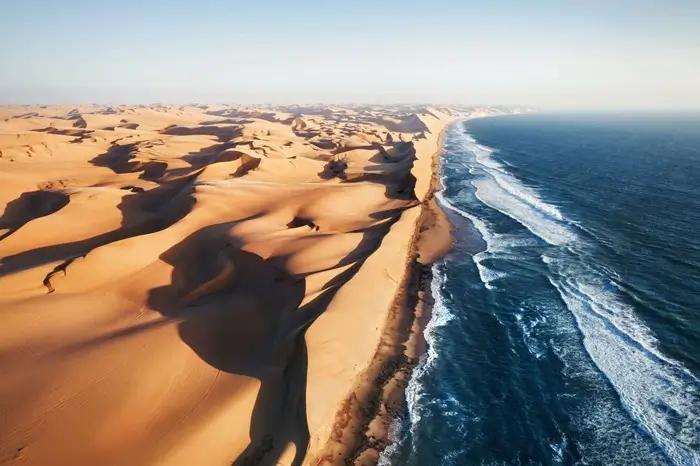
We will be departing Swakopmund at about 11:00, so there is time for a lie-in or a quick last-minute run around town. On departure, we first head east into the desert, crossing the Namib gravel plains, large areas of flat and seemingly barren terrain broken up by huge mountain inselbergs. We have two mountain passes to traverse this afternoon. The first is the mighty Kuiseb Pass, and we follow the road from the top of the hills, dropping steeply down into the canyon carved over aeons by the Kuiseb River on its way to debouch into the ocean at the port town of Walvis Bay.
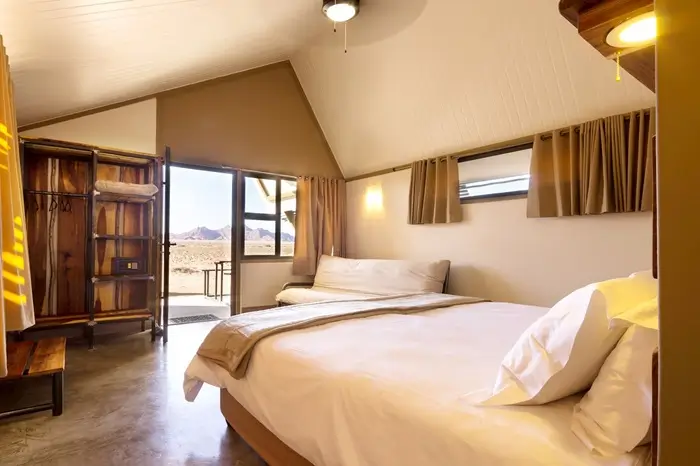
We climb up from the banks of the river and over the pass, travelling through the mountain peaks and onto the second, smaller canyon of the Gaub River, a tributary of the Kuiseb. We emerge from the mountains onto a flat road, and almost immediately we cross the Tropic of Capricorn at 23.5 degrees south. There is a signpost at this auspicious spot, and we stop along the road for photos. From here, we continue through the desert landscape to the tiny town of Solitaire and onwards again to our accommodation for the next two nights.
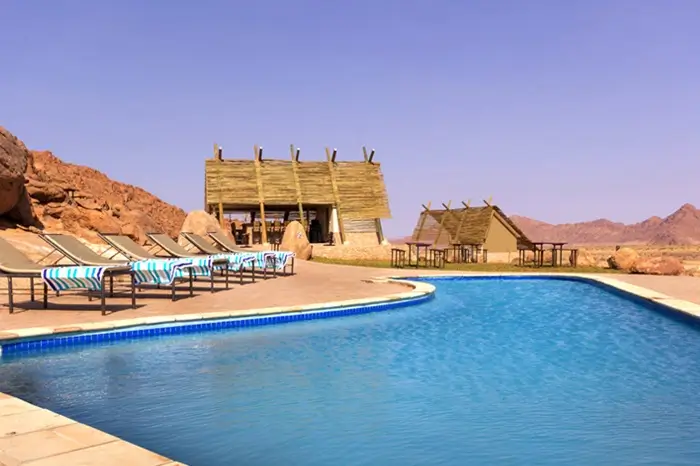
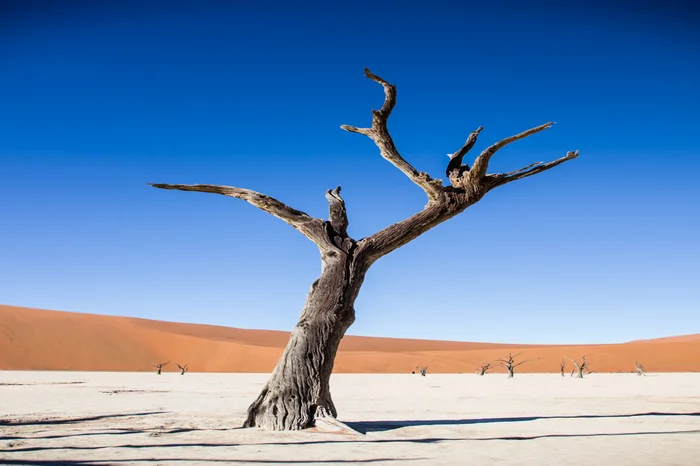
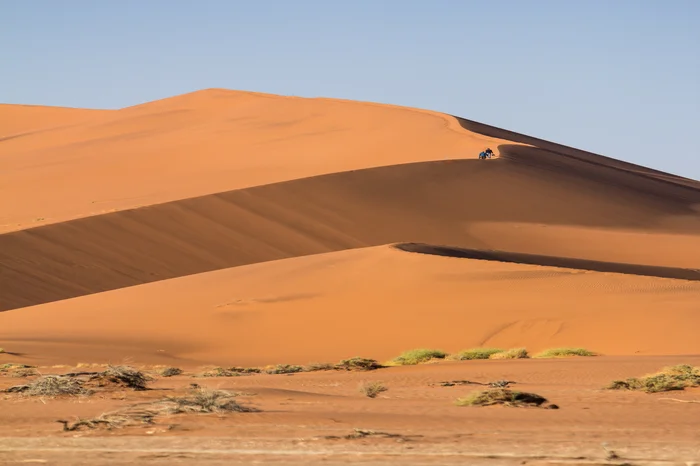
Getting to the dunes as early as possible is the name of the game this morning, and that means a pre-dawn start and a very early breakfast or breakfast on the way. We hope to arrive at the gate of the National Park just as it opens to visitors at sunrise. The best time to photograph the dunes is around sunrise and sunset. This is when you can see towering dunes illuminated a glowing orange, apricot red on one side and swathed in shadow on the other. The depth of field is fantastic at this time of day.
From Sesriem, we cover the 60 km into the dunes quickly and arrive at the 2×4 car park where all two-wheel-drive vehicles have to stop. From here, we enter the ancient Tsauchab River bed for the last 5km leg to Sossusvlei itself. The Tsauchab River is ephemeral; it only flows seasonally, when there is enough rain, and for the most part, the riverbed is dry. Aeons ago, during these rare floods, the Tsauchab sometimes received enough water to flow all the way to the Atlantic Ocean. However, as the millennia passed and the dune fields began to form (around five million years ago), wind-blown sand invaded the riverbeds.
The rivers became increasingly constricted by sand until, eventually, the occasional floods could no longer break through the sand barriers that the wind had erected. The valley we drove along this morning to get here is kept free of sand by the Tsauchab, but Sossusvlei is now permanently the end of the water.
Sossusvlei does still occasionally flood (perhaps once every decade). After good rains in the Naukluft Mountains, where the river originates, Sossusvlei can become inundated, and the resulting lake can persist for many months. However, the river can no longer find its original path to the Atlantic.
There is a 4×4 shuttle service that will transport us through the sandy terrain of the riverbed. We will visit Dead Vlei, an ancient pan surrounded by dunes, which is strikingly populated with dead, skeletal camelthorn trees. These trees have been a feature of this landscape for over 1000 years. Dunes almost surround Sossusvlei; just one narrow path, kept open by the Tsauchab River, remains. We have time to explore the area on foot and to climb one of the highest dunes in the world, some towering 300 m above us; the views are breathtaking and justly famous. We drive back the way we came (there is only one road), stopping at the iconic Dune 45 (so named as it is 45 km from Sesriem. There is time to climb Dune 45 if you still have energy, or perhaps just sitting in the shade at the base of the dune will suffice.
Driving back to Sesriem, we take a short excursion to see the Sesriem Canyon. Only 4 km from Sesriem, this canyon has been carved out of the landscape by the Tsauchab River. Approximately two million years ago, a period of intense cold known as an ice age occurred in Europe. This caused glaciers to form and led to a global decline in sea level. The knock-on effect of this at Sesriem Canyon was that it increased the length and water flow of the Tsauchab River. This greater force of water allowed the Tsauchab to begin cutting through the terrain, resulting in the canyon we can see today. We can easily walk into the riverbed; it is usually much cooler in the canyon, and we can follow the river for some way along its journey to Sossusvlei. We head back to Desert Camp in the late afternoon.
Today is our last day, but excitement is still on the menu. We head back to Solitaire, where our guide will get us a sample of their world-famous apple pie.
There is some lovely mountain scenery on our drive back to Windhoek. The road climbs up onto and over Namibia’s central plateau, and we return to Windhoek via the small community at Bullsport and the small town of Rehoboth. We arrive mid-afternoon and will be dropped off at Chameleon Backpackers or the accommodation of our choice within Windhoek city limits.
At Voyage Vista African Safaris, you have complete freedom to tailor your adventure. Our sample itineraries are fully flexible and can be customized to match your interests. Our travel experts collaborate closely with you to design the perfect journey of your dreams.
Experience expert private guides, well-equipped private jeeps, customizable itineraries, and exceptional customer care. Our thorough trip planning allows you to travel completely stress-free. We truly are your ideal partner for a memorable journey supported by top-quality service.